The Gamaliel-Ecclesia initiative (GEI)
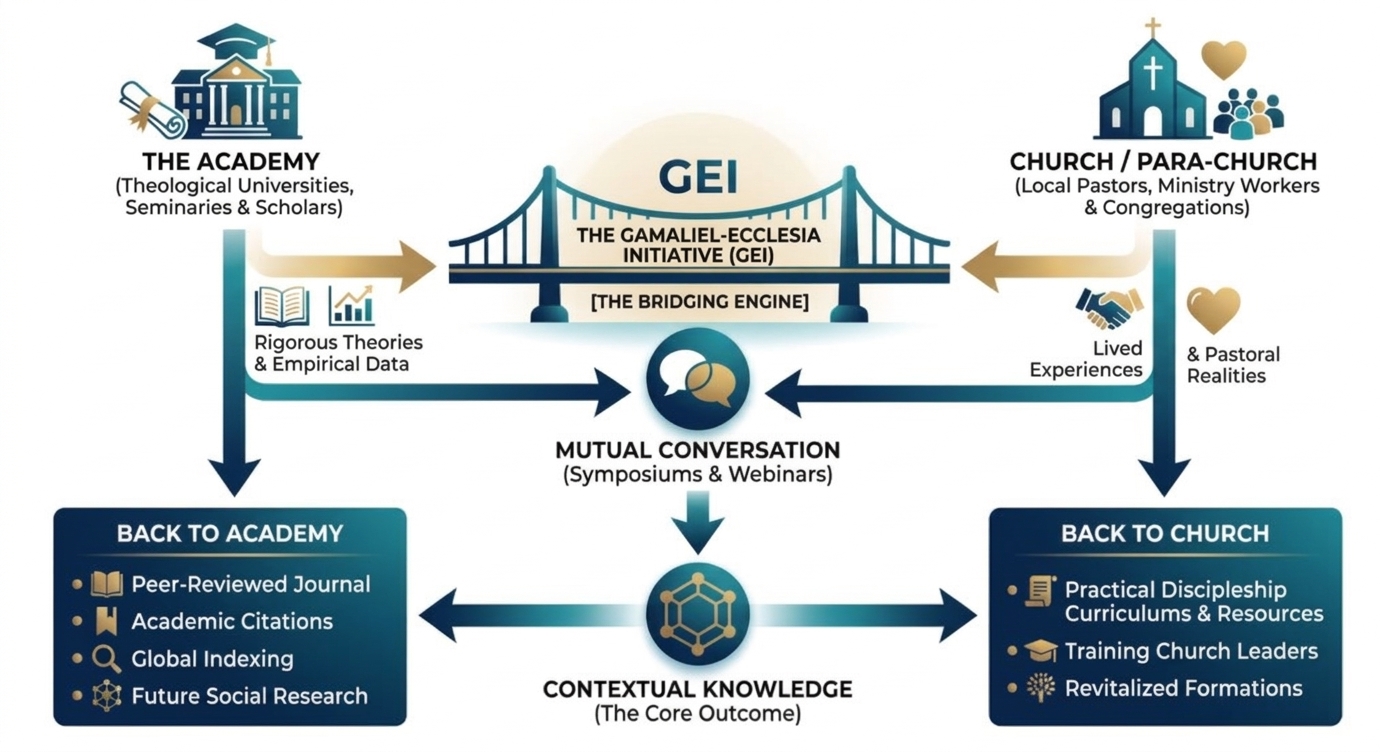
The Gamaliel-Ecclesia initiative bridges rigorous scholarly efforts with the lived experience of the church. The name beautifully captures our mission by anchoring our practical theology research in the wisdom of Gamaliel (Acts 5:34–39), who famously advocated for the objective, empirical observation of emerging movements to see where God is at work. Coupled with ‘Ecclesia,’ it signals our core commitment to bridging scholarly analysis with the life of the gathering church.”
The Gamaliel-Ecclesia initiative is not another seminary, denomination, or accrediting body; rather, it complements existing institutions by creating collaborative spaces for research and knowledge exchange between theological scholarship and the lived experience of the church. The initiative is envisioned as a pan-African collaborative practical theology research network that convenes scholars and church leaders, generates contextually grounded knowledge, publishes rigorous scholarship, and translates research into accessible resources for the flourishing of the African church and society.
Vision
To cultivate collaborative practical theological scholarship that strengthens the African church and contributes to global theological conversations.
Mission
The Gamaliel-Ecclesia Initiative advances practical theological research by bringing together scholars, church leaders, and Christian communities to investigate lived faith, generate contextual theological knowledge, and translate research into resources that strengthen the African church and society.
Purpose
As an independent practical theology research network, The Gamaliel-Ecclesia initiative seeks to remain flexible, innovative, and responsive to the changing needs of church and society through:
- Research – Generating context-driven, empirical data.
- Dialogue – Gathering minds for robust reflection.
- Publications – Disseminating materials widely to key leaders.
- Partnerships – Coordinating networks of active practitioners.
- Knowledge Translation – Processing complex scholarly data into accessible discipleship curricula, policy briefs, and practical ministry toolkits.